
Top Maintenance Challenges for Shacman Truck Dealers and How to Solve Them
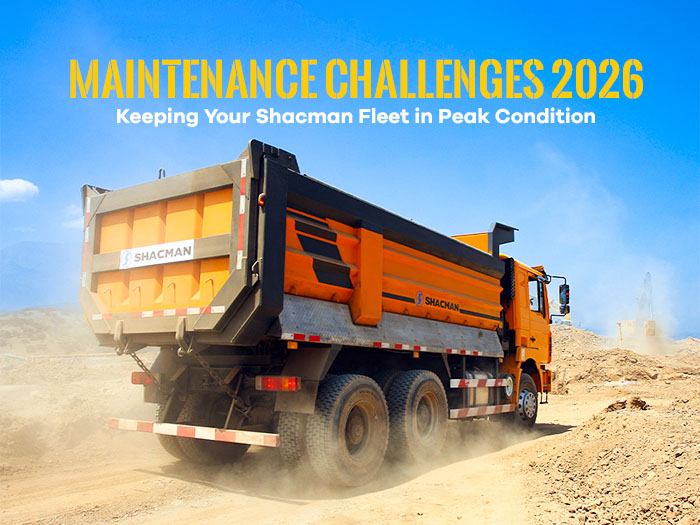
Shacman truck dealers face growing pressure to keep fleets in top condition while meeting customer expectations for reliability and performance. From managing complex maintenance schedules to sourcing genuine parts and handling technical updates, challenges often arise that can impact efficiency and client satisfaction. This guide explores the most common maintenance issues faced by Shacman truck dealers and provides practical solutions to help after-sales teams improve service quality and operational stability.
Definition and Overview of Maintenance Challenges
Maintenance of heavy-duty vehicles like the Shacman truck is a multi-layered process that requires coordination between technical teams, spare parts suppliers, and fleet managers. The definition of maintenance challenges extends beyond mechanical breakdowns to include administrative inefficiencies and communication gaps between workshops and clients. For a Shacman truck dealer, the complexity lies in aligning manufacturer recommendations with real-world operating conditions that vary drastically depending on region, load weight, and driving habits. Dealers often have to manage preventive maintenance plans, conduct diagnostic tests, and ensure that warranty obligations are fulfilled on time. These procedures demand high technical literacy and access to updated service bulletins. When fleet downtime increases, dealers risk losing customer trust. Therefore, an effective maintenance ecosystem is one that maintains operational continuity while adhering to environmental and safety regulations relevant to the transportation industry.
Market Overview and Industry Background
The global market for commercial vehicles, including brands like Shacman truck, has experienced rapid technological evolution over the past decade. Increased fuel efficiency standards and digital monitoring technologies now demand that dealers possess both hardware and software expertise. Across many transport hubs, heavy trucks are equipped with advanced telematics that transmit engine performance data to cloud-based platforms. While this innovation enhances preventive maintenance, it also complicates after-sales service for dealers lacking certified diagnostic tools or trained personnel. In emerging markets, another persistent challenge is access to authentic components — counterfeit or sub-standard replacements can damage the engine’s durability. According to the International Road Transport Union, unplanned maintenance costs can consume up to 25% of a dealer’s operational budget when genuine parts sourcing is inconsistent. Furthermore, rising demand for logistics services has increased vehicle utilization rates, putting extra stress on engines, transmissions, suspension systems, and braking components. For Shacman truck dealers, this environment underscores the need for predictive maintenance tools and data-driven service schedules. Dealers that invest in training programs and digital systems can better anticipate wear patterns, minimizing unexpected breakdowns and maximizing their customer satisfaction scores.
Technical Performance and Diagnostic Precision
One of the defining characteristics of the Shacman truck is its rugged design and adaptability to varied terrains, from highways to construction sites. However, such versatility demands rigorous technical calibration and consistent monitoring. Diagnostic precision is often limited by the availability of advanced scanning equipment and updated firmware. Dealers facing multiple customer fleets, each with different configurations and engine models, must synchronize diagnostic software to ensure compatibility. For instance, error codes generated by an older Euro-III compliant truck may differ from those in newer Euro-VI vehicles. Failure to interpret coded error data can lead to misdiagnosed faults, resulting in costly delays. Thus, mastering the electronic control unit (ECU) interface becomes crucial. Another frequent issue involves the synchronization of mechanical calibration with emissions-control settings — overlooked adjustments in injection timing or air filtration can impair fuel efficiency and accelerate component aging. Shacman truck maintenance teams should therefore adhere to a structured inspection protocol that includes both physical checks and digital validations. Establishing technical benchmarks enhances reliability while ensuring alignment with international transportation standards such as ISO 22241 and UNECE vehicle safety regulations.
Comparison Analysis: Common Issues among Dealers
Comparing Shacman truck dealers across different regions reveals patterns in recurring maintenance difficulties. In colder climates, issues related to fuel system condensation and cold starts are dominant, while in tropical markets, dealers face challenges in managing overheating and air conditioning system failures. By contrast, dealers in high-altitude regions often report fluctuating turbocharger performance due to air density variations. These geographical contrasts create divergent maintenance priorities. However, all dealers share the challenge of maintaining consistent service records. Poor documentation and a lack of centralized digital platforms often lead to redundant inspections and missed preventive actions. A well-structured maintenance database not only speeds up problem diagnosis but also improves parts inventory control. Benchmark studies show that dealers who deploy integrated maintenance management systems reduce downtime by up to 30%. The use of predictive analytics derived from telematics software can further streamline scheduling and highlight high-risk components before breakdown occurs. In comparing maintenance performances, leading Shacman truck dealers tend to have strong supplier partnerships, standardized diagnostic procedures, and comprehensive customer feedback loops integrated into their operations.
Case Studies and Practical Solutions
Examining real-world practices reveals actionable insights. In Southeast Asia, a regional Shacman truck distributor established a centralized data system that tracks service logs, component wear history, and mechanic performance indices. Within six months, the dealer noted a 20% drop in unscheduled repairs. Another success story came from a European distributor that cooperated with local universities to train technicians in advanced diagnostics. This cooperative education not only reduced misdiagnosis incidents but also raised service trust among fleet operators. In the Middle East, one maintenance center pioneered the use of engine oil analysis kits to monitor lubricant viscosity degradation. The collected data enabled them to personalize service intervals, avoiding unnecessary oil changes while extending engine life. Each of these examples demonstrates that practical solutions revolve around systematic data use, employee training, and transparent customer communication. For dealers, integrating predictive software like CAN bus analyzers or real-time IoT-based sensor dashboards turns routine maintenance into a continuous improvement cycle. The key takeaway for Shacman truck dealers is that successful maintenance models depend on measurable feedback, disciplined inspection routines, and long-term supplier alignment that ensures genuine spare availability even in remote service centers.
Trend and Future Insights
Looking ahead, digitalization and green energy will redefine maintenance frameworks for commercial fleets. Shacman truck models are increasingly integrating hybrid or alternative fuel technologies, creating a new layer of complexity for technicians accustomed to diesel systems. Predictive maintenance supported by artificial intelligence will likely become standard practice across dealerships. This trend will require dealers to analyze thousands of operational data points — temperature, load, torque, and fuel consumption — to generate auto-alerts for potential faults. Sustainable maintenance practices, such as recycling brake fluids or implementing eco-friendly lubricants, are expected to become minimum compliance measures under international standards like ISO 14001. Furthermore, blockchain systems may appear in part supply chains to verify authenticity and trace manufacturing origins. Dealers embracing these technologies will not only enhance operational reliability but also reinforce brand credibility. The evolution of maintenance support networks will turn from reactive workshops into smart service ecosystems where every Shacman truck is connected to a digital service grid, enabling predictive alerts and instant troubleshooting recommendations to field technicians.
FAQ and Common Misconceptions
Many Shacman truck dealers often encounter service myths that hinder performance management. One common misconception is that newer diesel engines require less frequent inspection — in reality, new models often have tighter tolerance limits and demand even more precision in calibration. Another misunderstanding concerns oil replacement cycles: while synthetic oils last longer, extreme operating environments dramatically reduce their lifespan. Dealers are also sometimes misled by cost-saving substitutes, believing that compatible parts from third-party producers perform equivalently to genuine parts. However, slight differences in material composition can lead to premature component wear. To clarify such doubts, a disciplined FAQ repository helps staff and clients share accurate maintenance knowledge. Recommended practice involves routine technical refreshers and manufacturer-led seminars. Dealers should also recognize that warranties can be voided if unapproved lubricants or electrical parts are used. Addressing these misconceptions not only protects mechanical integrity but also strengthens trust between distribution networks and fleet operators. For after-sales technicians, continuous learning remains the primary defense against outdated maintenance assumptions.
Call to Action: Why Choose Our Professional Support
For Shacman truck dealers dedicated to maintaining high performance, professional support is not optional but essential. Our team provides comprehensive consultation on maintenance scheduling, part sourcing, and diagnostic upgrades tailored specifically for the Shacman truck ecosystem. With advanced data analytics and certified service frameworks, we enable after-sales departments to boost efficiency, reduce unplanned downtime, and enhance customer confidence. Whether you operate a regional service hub or a nationwide distribution network, our approach ensures that each maintenance cycle meets global quality benchmarks. Partnering with our experts means access to up-to-date technical insights, sustainable service practices, and long-term maintenance strategies that future-proof your operations. Contact us today to learn how we can assist your dealership in building a stronger, more reliable after-sales infrastructure for every Shacman truck on the road.
Please give us a message
Our engineers help you choose the right truck or trailer based on:
- Your cargo type
- Road condition
- Payload requirement
- Local regulations