
Reducing Downtime: Best Practices for Shacman Truck After-Sales Teams
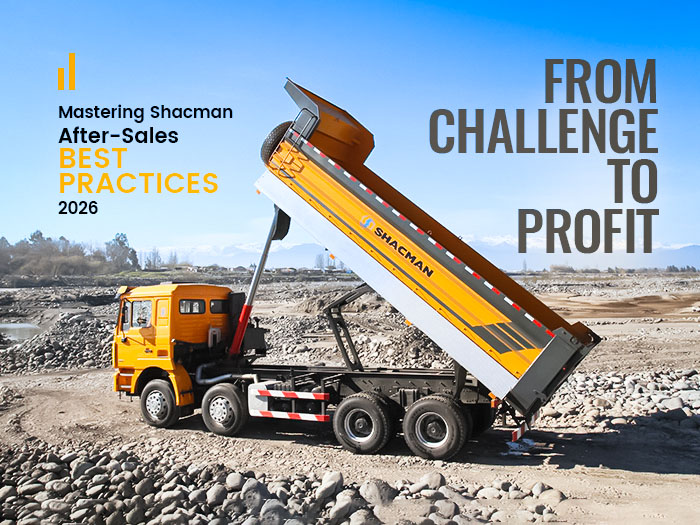
Reducing downtime is essential for every after-sales team working with a Shacman truck. Consistent performance, timely maintenance, and proactive service strategies ensure that vehicles stay on the road and customers remain satisfied. This article explores practical best practices for technicians, dealers, and distributors to optimize efficiency, improve response times, and strengthen customer trust across the transportation network.
Definition and Overview
In the realm of commercial transportation, downtime represents any period when a vehicle, such as a Shacman truck, is unavailable for operation due to maintenance, repair, or technical issues. For after-sales teams, understanding downtime is the first step toward reducing it. The key principles involve preventive maintenance, real-time diagnostics, and fleet management optimization. A Shacman truck is designed for durability, yet like any complex machine, it requires skilled attention to maintain peak performance. Establishing a unified process for tracking service schedules, reporting failures, and coordinating with parts suppliers ensures that trucks spend more time generating revenue and less time idle in workshops. The after-sales process thus becomes not just a reactive service but a strategic component of the entire transportation lifecycle. Personnel involved in Shacman truck maintenance need a synergy between technical knowledge and customer communication, bridging mechanical efficiency with relationship trust.
Market Overview of the Transportation Industry
The transportation industry is experiencing a transformation toward intelligent logistics, autonomous diagnostics, and sustainability. Within this evolving market, after-sales service for heavy-duty vehicles like Shacman trucks has gained strategic relevance. Distributors and agents must now align after-sales performance with wider industry demands: reduced emissions, data-driven maintenance, and prompt service turnaround. Global fleet operators emphasize total cost of ownership, which means that after-sales efficiency directly influences purchasing decisions. Dealers who provide quick repair solutions and reliable parts availability differentiate themselves in a highly competitive marketplace. The expectation is not only to repair a Shacman truck quickly but to anticipate potential system failures before they happen. Technologies such as predictive analytics, IoT integration, and telematics monitoring are being adopted to minimize unplanned downtime. Therefore, understanding broader industry shifts enables after-sales teams to adapt service models, enhance customer engagement, and develop a network-wide reputation for operational excellence.
Technical Performance and Maintenance Strategies
Every Shacman truck integrates advanced engineering, combining robust powertrains, efficient fuel systems, and intelligent control modules. To reduce downtime, after-sales technicians must focus on routine oil analyses, gearbox diagnostics, brake inspections, and software calibration. Periodic monitoring not only ensures compliance with manufacturer standards but also extends the lifespan of critical components. Implementing an automated maintenance alert system enables repair teams to act before a mechanical issue escalates. Moreover, leveraging digital service logs can unify maintenance data across multiple service centers, allowing technicians to track the service history of each Shacman truck accurately. It is vital to use genuine replacement parts and approved fluids to prevent secondary failures caused by compatibility errors. Service managers should develop standard operating procedures (SOPs) based on real-world feedback. Training sessions for mechanics and supervisors reinforce consistent service quality, ensuring that no truck remains offline longer than absolutely necessary. These technical methodologies, when followed rigorously, create significant cost savings and operational predictability for transportation operators.
Comparison Analysis: Reactive vs Proactive Service
A critical distinction in after-sales management lies between reactive and proactive service models. Reactive service occurs when maintenance is performed only after a fault has been detected. Although it solves immediate problems, it often leads to extended downtime for a Shacman truck. Proactive service, on the other hand, involves monitoring data trends, identifying anomalies, and intervening before a breakdown occurs. In a comparison study across logistics fleets, proactive monitoring reduced repair frequency by nearly thirty percent compared to reactive scheduling. Dealers who have adopted remote diagnostic tools can perform virtual inspections, saving both time and logistics costs. Proactive service also supports customer loyalty since operators trust that their vehicles are being cared for even when no visible issues exist. Shacman trucks equipped with smart telematics provide a steady influx of performance metrics that can be analyzed to develop efficient maintenance patterns. The key takeaway is that the shift from reactive to proactive service fosters long-term reliability and positions after-sales teams as strategic partners rather than simple repair agents.
Case Studies: Success from Field Implementations
A leading logistics operator in Southeast Asia collaborated with a Shacman truck dealership to reform its maintenance workflow. Historically, trucks experienced excessive idle days due to part shortages and inefficient scheduling. By introducing a centralized digital dashboard connected to Shacman diagnostic systems, the company reduced average repair time by forty percent. Another case in Africa involved remote regions where spare parts distribution was limited. The after-sales distributor implemented mobile repair units equipped with essential Shacman parts and technical tablets, enabling on-the-spot service support. The results showed a remarkable rise in vehicle uptime and a fifty percent improvement in customer retention. Meanwhile, in Europe, a dealer network unified warranty claims and maintenance records into a shared database. This integration decreased repeat service calls because technicians could quickly identify recurring fault patterns. These examples demonstrate that strategic planning, data sharing, and strong dealer coordination are vital to maintaining Shacman truck reliability while ensuring your business reputation remains solid within the transportation ecosystem.
Cost Analysis and Alternatives
Reducing downtime directly correlates with reducing operational expenses. When a Shacman truck is out of service, fleet owners lose potential revenue per kilometer. For after-sales teams, optimizing cost means both minimizing repair frequency and shortening service cycles. Genuine components may cost more upfront, but they drastically lower replacement frequency and warranty claims. Service managers should calculate downtime costs, including forgone deliveries, driver wages, and replacement vehicle rentals. Implementing predictive maintenance systems may appear expensive initially; however, the return on investment becomes evident through reduced part failures and improved asset utilization. Alternatives such as outsourcing maintenance to third parties must be carefully considered, as they may decrease internal control over repair quality. Thus, achieving the perfect cost-service balance is not about cutting expenses aggressively but managing long-term reliability. Transparency with dealers and distributors regarding cost structures helps maintain shared accountability, ensuring that the Shacman truck brand continues delivering dependable service at every level of the distribution chain.
FAQ and Common Misconceptions
After-sales personnel often face recurring questions about optimal maintenance cycles for a Shacman truck. One common misconception is that extending service intervals saves costs. In reality, deferred maintenance significantly increases the likelihood of major component failure. Another misunderstanding is that new trucks do not require inspection until long after initial deployment. However, running-in inspections can identify manufacturing variances early and prevent costly warranty claims. Technicians should also clarify that generic diagnostic tools may not fully align with proprietary Shacman software calibration, potentially leading to inaccurate assessments. Proper training and certification are essential to maintain brand-specific integrity. Dealers should establish internal FAQs or a digital knowledge base to provide consistent responses to repetitive issues. By promoting accurate technical information and combatting myths, after-sales teams help operators understand the importance of structured maintenance and encourage long-term partnerships centered around mutual reliability.
Trends and Future Insights
The future of Shacman truck maintenance lies in advanced connectivity, artificial intelligence, and sustainability. Predictive analytics will soon reach higher precision with machine learning algorithms analyzing real-time engine and brake data. Augmented reality tools will empower technicians to conduct complex repairs more efficiently through virtual guidance. In parallel, environmental regulations will continue to influence both component design and maintenance procedures, driving eco-friendly lubrication, parts recycling, and emission testing protocols. After-sales distributors must integrate green practices within their operations to stay compliant and appeal to sustainability-conscious customers. Furthermore, cloud platforms will increasingly connect dealers globally, allowing synchronized updates on Shacman truck performance benchmarks. For after-sales teams, embracing these trends early means developing technical competencies that position them as innovative problem-solvers. By investing in continuous learning and digital infrastructure, companies can ensure that downtime becomes an exception, not a routine obstacle, across the transportation industry.
Why Choose Us
Our after-sales experts combine deep mechanical expertise with real-world logistics experience. We understand the operational pressures that Shacman truck service teams face daily—tight delivery schedules, remote repair challenges, and demanding customer expectations. Our dedicated support framework offers real-time assistance, certified Shacman parts sourcing, and data-driven maintenance advice. Whether you are a distributor, agent, or maintenance supervisor, partnering with our team ensures measurable improvements in uptime and service profitability. We provide tailored training programs, transparent warranty management, and strategic consultations that align technical operations with business goals. Let our professionals help your Shacman truck fleet achieve the highest reliability standards, reducing downtime and maximizing fleet productivity.
Please give us a message
Our engineers help you choose the right truck or trailer based on:
- Your cargo type
- Road condition
- Payload requirement
- Local regulations