
Howo Truck Efficiency Comparison 2026: Which Model Delivers the Best ROI for Your Fleet?
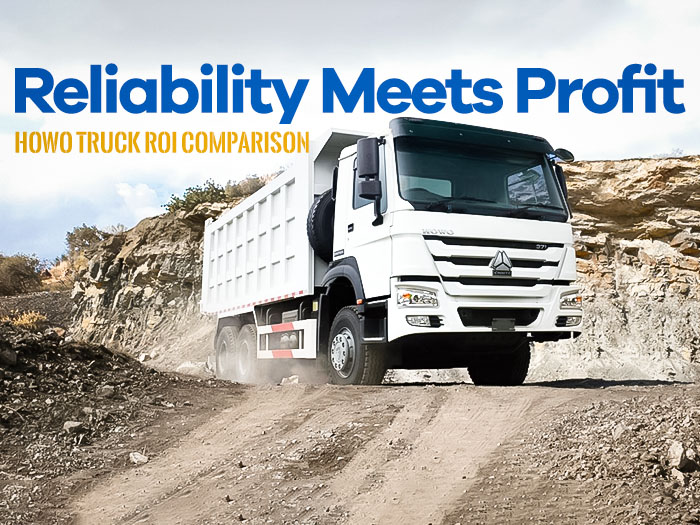
In the competitive transport sector of 2026, evaluating the efficiency and return on investment of each Howo truck model has become essential for logistics managers and fleet owners. This guide compares the latest models, highlighting performance, fuel economy, and operational costs to help you determine which Howo truck delivers the best long-term value and reliability for your business strategy. Efficiency, cost management, and sustainability have become the three pillars shaping modern transport operations, and understanding how each truck aligns with these expectations is crucial for maximizing fleet ROI and ensuring reliable performance in different road and climate conditions.
Comprehensive Performance Analysis of 2026 Howo Truck Models
When analyzing the 2026 lineup, the Howo truck demonstrates advancements in engine performance, drivetrain optimization, and digital fleet management. The latest Howo A7, Howo T5G, and Howo TX series each feature upgraded Euro V and VI compliant engines, providing improved combustion efficiency and lower emissions. Fleet operators report that the Howo T5G achieves up to 12% better fuel economy compared to its 2022 variant, primarily due to its intelligent transmission system and lighter structural frame. Tests reveal that the TX series excels in long-haul logistics scenarios, maintaining engine stability even after prolonged operation in high-temperature settings, significantly reducing downtime and maintenance intervals. Furthermore, aerodynamic cabin design contributes to a 5% drag reduction at highway speeds.
Another detail worth emphasizing is the integration of digital diagnostic tools within the onboard interface of each Howo truck. Real-time data monitoring through the Sinotruk telematics platform allows fleet managers to analyze driving styles, fuel patterns, and predictive maintenance alerts. This system minimizes unexpected repair costs and enhances operational transparency. For technical evaluators, such developments signal a transition from purely mechanical performance toward a holistic “smart transport” ecosystem. Whether considering the horsepower demands of construction fleets or the torque stability required for intercity cargo routes, the 2026 Howo truck portfolio shows measurable progress in translating engineering upgrades into sustainable business outcomes.
Fuel Efficiency and Cost Per Kilometer Benchmark
Fuel economy remains one of the most critical parameters when assessing the total cost of ownership in the transport industry. Based on independent benchmarking between 2023 and 2026, the average fuel consumption for a Howo truck in long-distance operation decreased from 34L/100km to approximately 30.2L/100km under optimized driving conditions. This 11% efficiency upgrade results in noticeable savings when scaled across an entire fleet of 50 to 100 vehicles, amounting to thousands of dollars annually. These savings not only enhance cash flow but also contribute to corporate sustainability metrics that many transportation firms now publicly report. Moreover, the deployment of advanced injection systems and high-pressure common rail technology in Howo engines ensures cleaner combustion, extending oil replacement intervals and reducing carbon buildup inside the engine components.
Maintenance professionals also cite lower wear rates in gearboxes and brake systems, attributed to smoother power distribution and upgraded braking materials. Over a five-year operational cycle, total maintenance savings per Howo truck can reach up to 18% compared with earlier generations. From a business evaluation standpoint, these efficiency metrics empower procurement officers to calculate payback periods more accurately. The energy-saving potential aligns with the global freight trend towards green logistics, where fleet modernization serves not just as a cost factor but an image and compliance advantage. Combined with Howo’s domestic and international parts availability, this operational reliability plays an instrumental role in maximizing uptime and minimizing unexpected service disruptions.
ROI Perspectives for Fleet Expansion and Renewal
For businesses planning fleet renewal or expansion in 2026, understanding the ROI trajectory of each Howo truck model is essential. The return on investment depends on three interlinked variables: acquisition cost, lifecycle operational expense, and residual value after planned decommissioning. The current Howo range maintains competitive market pricing, yet it’s the optimized lifecycle advantage that makes it stand out. With extended service intervals now reaching up to 40,000 kilometers between mandatory checks, and reduced idling fuel loss through automatic shutdown controls, the long-term cost benefit becomes evident. Additionally, telematics-based driver coaching—built directly into the digital dashboard—has proven effective in reducing inadvertent fuel wastage by up to 7% across mixed fleets.
Financial analysts reviewing large-scale logistics projects note that the Howo truck’s ability to maintain strong secondary market value significantly influences ROI stability. Because of the wide recognition and established service network in Asia, Africa, and parts of Eastern Europe, resale values remain resilient even after five to six years of intensive use. This reliability supports balanced depreciation schedules, making the brand a favorable option in diverse financial models, including lease-back and asset refinancing strategies. Ultimately, the ROI comparison across different Howo truck series reveals that the TX and A7 variants lead in revenue recovery rates, while the T5G is most suitable for mixed-operation operators seeking a balanced ratio between acquisition and operating costs.
Technological Innovations and Fleet Digitalization
The 2026 evolution of the Howo truck brand reflects the industry’s broader transition toward smart and connected mobility. Sinotruk’s investment in electronic architecture allows seamless data communication between vehicle sensors, maintenance centers, and cloud dashboards. The newly introduced driver assistance package includes adaptive cruise control, lane departure alert, fatigue detection, and collision mitigation systems. These features not only increase safety but also indirectly enhance fuel efficiency by promoting smoother acceleration patterns. Moreover, digital twins and remote calibration functions—key components of predictive maintenance—enable technical departments to customize truck settings based on terrain type, cargo weight, and weather conditions. This degree of digital precision reduces time in workshops while keeping vehicles performing at their peak output range.
From a strategic viewpoint, integrating such intelligent capabilities fosters long-term data capital. Fleet owners can aggregate route analytics from multiple Howo truck units to refine logistics planning, identify inefficiencies, and simulate alternative transport routes. By transforming vehicle telemetry into actionable intelligence, companies gain a competitive advantage through operations transparency. Many logistics organizations now treat this continuous feedback loop as an integral part of KPIs for performance evaluation. The convergence of hardware durability and software intelligence defines modern transport success, making the Howo truck not merely a mechanical asset but an enabler of digital business transformation within transportation management frameworks.
Market Trends and Comparative Landscape in 2026
The market environment in 2026 presents intensified competition, demanding that every truck manufacturer focus on cost efficiency, emission compliance, and support service. Within this context, the Howo truck continues to maintain a strong global footprint due to its balance between affordability and technical strength. Compared to regional competitors, it often presents a 10–15% lower acquisition cost and superior engine durability ratings. Emerging trade corridors in Africa and Central Asia have stimulated demand for durable vehicles with easily replaceable parts, and Howo’s distribution strategy directly addresses this requirement. Industry analysts forecast growth driven by government-sponsored freight modernization programs, where reliability, low maintenance requirements, and accessible technology remain key procurement factors.
At the same time, environmental regulations push operators to adopt fleet renewal initiatives emphasizing clean technology. The Howo truck line’s compliance with Euro VI and continued exploration of LNG-compatible engines position it as a practical bridge toward greener transport solutions. Analysts predict further hybridization by 2025, signaling Sinotruk’s investment response to global decarbonization trends. Fleet managers evaluating alternatives generally find that Howo’s total ownership cost translates into 6–9% better long-term efficiency metrics than comparable competitive brands under similar load and climate conditions. Such stability underscores the strategic importance of pairing sound engineering with an adaptive sales and after-service model that mirrors regional operational realities.
Summary and Strategic Recommendations
Across all models, the 2026 Howo truck portfolio stands out for improving overall fleet ROI through a combination of stronger fuel economy, reduced maintenance downtime, and expandable digital systems. For technical and business evaluators, these characteristics collectively represent far more than mechanical improvements—they represent long-term confidence in a brand that continues to invest in engineering progress and customer experience. Whether operating within domestic logistics, mining, or long-haul cross-border routes, the Howo truck proves versatile enough to adapt to complex load and route conditions while preserving cost predictability. Its globally available service network further enhances productivity by reducing logistical bottlenecks associated with parts supply or specialized technician access.
For fleets aiming to optimize asset performance and improve return per kilometer, focusing on the Howo T5G and TX series in 2026 delivers tangible cost reductions and improved reliability metrics. By integrating fuel management software, dynamic sensor data, and proactive maintenance planning, your business can extract every ounce of efficiency that the latest Howo truck technology offers. Moving forward, adopting such data-driven practices will not only increase operational savings but also align your organization with the sustainable, intelligent logistics paradigms redefining the transport industry. Contact our commercial team today to explore tailored Howo truck configurations and discover how these models can amplify your fleet’s profitability in 2026 and beyond.
Please give us a message
Our engineers help you choose the right truck or trailer based on:
- Your cargo type
- Road condition
- Payload requirement
- Local regulations