
How to Choose the Right Shacman Truck for Your Logistics Project in 2026: Cost, Performance, and ROI Insights
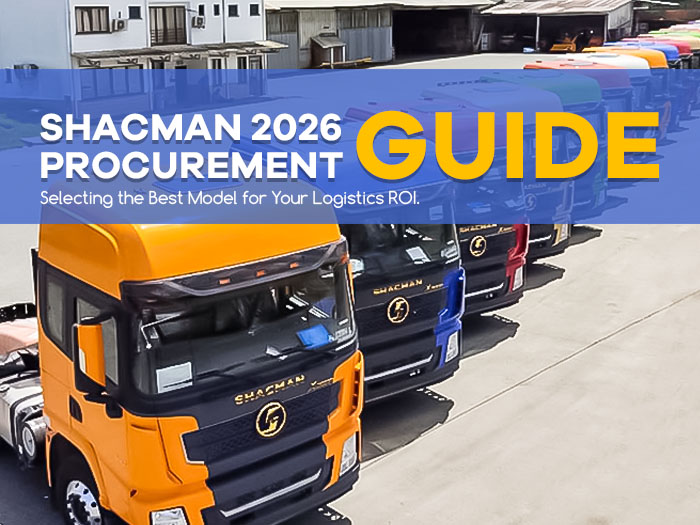
Choosing the right Shacman truck for your logistics project in 2026 requires a smart balance between cost, performance, and long-term return on investment. Whether you're comparing models, evaluating technical specifications, or planning fleet upgrades, understanding how each Shacman truck aligns with your operational needs can significantly improve efficiency and profitability. This guide explores key decision factors and insights to help logistics professionals make confident, data-driven purchasing choices.
Definition and Overview of Shacman Trucks
A Shacman truck is a robust heavy-duty vehicle built to handle demanding transport and distribution tasks across a variety of logistics and construction sectors. Produced by Shaanxi Automobile Group, these trucks blend advanced engineering with practical features designed to reduce operational costs and enhance payload efficiency. In 2026, the global logistics industry continues to depend on reliable truck options to meet stringent delivery timelines. Shacman trucks have gained recognition for their durability, variety of configurations—such as tractor heads, dump trucks, and lorry trucks—and their adaptability to diverse road conditions. Understanding the key categories and design principles helps decision-makers align truck capabilities with specific logistics demands, from regional haulage routes to cross-border cargo transport.
Market Overview and Industry Context in 2026
By 2026, the transportation industry faces heightened concerns about fuel efficiency, emissions compliance, and lifecycle cost sustainability. Fleet managers and procurement stakeholders are re-evaluating how vehicle selection impacts overall logistics performance. Shacman trucks stand out in this context for their balance of affordability and performance innovation. The brand’s presence in emerging markets has expanded due to an increased focus on cost-effective logistics infrastructure. Market analysts note that the demand for heavy-duty vehicles in sectors like mining, container transport, and bulk distribution is growing at a steady pace. As freight volumes rise, optimizing truck selection becomes more than a technical choice—it’s a strategic investment that influences both profitability and environmental responsibility.
Technical Performance and Key Specifications
Modern Shacman trucks integrate advanced engine systems, electronic braking, intelligent control modules, and reinforced chassis structures built to extend service life under intensive workloads. Engine options range from economical inline-six diesel units to high-torque powertrains compatible with Euro VI emission standards. For logistics managers comparing model variants, attention should be paid to horsepower, torque ratings, axle load capacity, and transmission automation. In addition, the braking and suspension systems are optimized to minimize vibrations and maintain stability on rough terrain. The table below summarizes key performance parameters of representative models for 2026.
Application Scenarios
Different logistics operations demand unique truck characteristics. For long-distance freight transport, Shacman tractor heads provide excellent cabin ergonomics, fuel performance, and gear ratios suited for highway conditions. Construction and mining operators often turn to the Shacman F3000 series for its powerful dump configurations and reinforced axles. In urban and regional distribution, smaller variants contribute to efficient loading and unloading cycles. Cold chain logistics operators benefit from models compatible with refrigeration units and auxiliary power systems. Understanding these contexts helps users leverage the right shacman truck for each project application, optimizing fuel usage, route planning, and cargo integrity across varying routes and climates.
Comparison Analysis: Shacman vs. Competitors
When compared with similar brands within the heavy-duty vehicle segment, such as FAW, Howo, or Volvo, Shacman trucks tend to offer a favorable cost-to-performance ratio. The total cost of ownership (TCO) is lower primarily due to easier parts availability and simplified maintenance schedules. European counterparts often prioritize luxury and advanced sensors, whereas Shacman focuses on mechanical reliability and price competitiveness. For fleet operators looking to manage high vehicle turnover or deploy trucks in rugged environments, this price-performance balance directly enhances ROI. The following aspects mark key comparison dimensions: initial purchase price, maintenance frequency, residual value, and overall drivetrain efficiency.
Procurement Guide and Selection Criteria
Making an informed purchase depends on quantifiable and qualitative assessments. Procurement teams should first outline route conditions, average payload weight, desired service intervals, and budget constraints. Once technical requirements are fixed, model comparison should factor in dealer support, warranty clauses, and parts lead times. For example, logistics enterprises operating across uneven terrain may prioritize Shacman’s reinforced suspension and torque-rich engines, while city delivery fleets might value fuel consumption and maneuverability. Test drives and after-sales feedback from similar operators are useful indicators. Companies can request total cost analysis based on estimated mileage and maintenance cycles to predict five-year ROI projections with higher accuracy.
Cost and Investment Considerations
Evaluating the total expenditure of a Shacman truck goes beyond its sticker price. Operating expenses such as fuel, tires, lubricants, taxes, and repair services accumulate significant long-term impact. The brand’s advantage often emerges through simplified mechanical layouts that reduce downtime risk. Studies indicate that a well-maintained Shacman truck can outperform higher-cost alternatives in net profit yield when running in intensive logistics cycles. By computing the cost per ton-kilometer (CTKM) and estimating average truck lifespan, fleet owners can define clear ROI targets. Leasing models and joint financing options now allow companies to diversify acquisition strategies, maintaining cash flow flexibility while upgrading fleets in alignment with 2026 sustainability goals.
Standards and Certification Compliance
Compliance remains a primary consideration for international logistics projects. Shacman trucks conform to ISO/TS 16949 quality management systems, with selected models certified under Euro V and Euro VI emission standards. This ensures compatibility with export markets across Africa, Southeast Asia, and Europe. For operators managing multinational supply chains, verifying certification levels protects against import restrictions and environmental penalties. Additionally, Shacman manufacturing facilities integrate certified safety protocols and advanced testing labs that verify torsional rigidity, braking efficiency, and engine endurance cycles exceeding global benchmarks. By prioritizing certified models, companies reduce compliance risks while reinforcing reputation for environmental accountability.
Case Studies and Real-World Success Examples
A logistics firm in East Africa recently integrated twenty Shacman X3000 trucks for its cement distribution network. Prior to adoption, the company struggled with high maintenance costs from older European models. After twelve months, they recorded a 15% reduction in downtime, 12% fuel savings, and improved driver satisfaction due to ergonomic cab designs. Similarly, a Chinese port operator deployed the F3000 dump configuration fleet, achieving substantial productivity gains during peak-load conditions. These outcomes illustrate how data-backed truck selection aligned with terrain and cargo specifics can drive measurable business advantage. The consistent performance of Shacman trucks underscores their adaptability for diverse operational ecosystems.
FAQ and Common Misconceptions
- Are Shacman trucks difficult to maintain? Not necessarily. The brand is supported by an extensive service network and modular design that simplifies maintenance.
- Can Shacman vehicles handle extreme climates? Yes, the latest cooling and filtration systems ensure reliable performance in both desert and cold environments.
- Is the resale value competitive? Due to durability and recognized brand reputation, Shacman trucks generally retain solid residual value in secondary markets.
- How does the warranty compare? Standard warranties range from one to two years, extendable via authorized distributors subject to operational coverage needs.
Future Trends and Outlook for 2026+
In the coming years, the evolution of AI-assisted telematics and hybrid diesel-electric drivelines will further redefine heavy vehicle efficiency. Shacman’s roadmap includes integrating predictive diagnostics and reduced-weight composite materials to enhance load-to-fuel ratios. The emphasis on connectivity through data monitoring systems also supports smart fleet management across continents. As governments intensify emissions regulations, manufacturers investing in clean diesel and alternative fuel compatibility gain distinct advantage. For logistics planners, aligning procurement cycles to these trends can ensure long-term viability, keeping fleets technologically relevant while minimizing operational disruptions.
Why Choose Us
Partnering with us means accessing an expert team experienced in matching Shacman trucks to precise logistics and operational frameworks. We provide technical consultations, total cost simulations, and after-sales coordination to ensure clients extract maximum value from every investment. Whether you manage domestic freight or cross-border supply chains, our solutions integrate training and real-world testing to sustain optimal performance. Contact our specialists to discuss configurations that meet your 2024 targets and enhance fleet efficiency for the next decade.
Please give us a message
Our engineers help you choose the right truck or trailer based on:
- Your cargo type
- Road condition
- Payload requirement
- Local regulations