
Cost Analysis: Choosing the Right Shacman Truck Model for Your Logistics Business
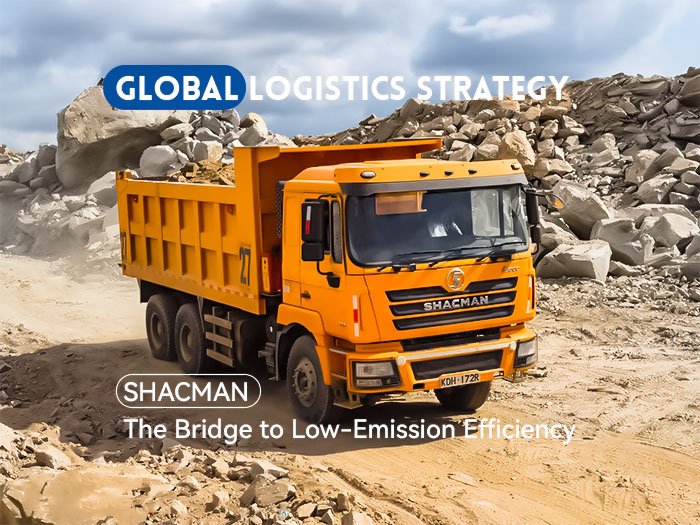
Cost Analysis: Choosing the Right Shacman Truck Model for Your Logistics Business
Selecting the right Shacman truck model can make a significant difference in operational efficiency and long-term profitability for logistics businesses. This cost analysis explores how different Shacman truck options align with various transportation demands, helping after-sales teams, dealers, and distributors make smarter investment decisions. By understanding total ownership costs and performance factors, your logistics business can optimize fleet value and service delivery. Choosing a Shacman truck is not just about the initial purchase price; it is about understanding fuel economy, maintenance frequency, and lifecycle costs. For after-sales professionals, knowing these factors empowers proactive maintenance planning. For dealers and distributors, such analyses strengthen consultation accuracy and customer trust. Ultimately, the goal is simple: achieve a profitable balance between power, payload, and long-term reliability—key components that define the Shacman brand in the global logistics marketplace.
Definition and Overview
A Shacman truck is a commercial heavy-duty vehicle designed for transporting a wide range of goods, from construction materials to general logistics cargo. Manufactured by Shaanxi Automobile Group, Shacman has earned international recognition for durability, cost-efficiency, and adaptability to complex logistics needs. For many logistics companies, the brand represents a strategic investment that merges cost control with advanced engineering. In essence, a Shacman truck integrates performance optimization with economic feasibility. Each model lineup—such as the X3000, F2000, and L3000 series—caters to different operational scales and geographic terrains. For instance, while the X3000 excels in long-haul efficiency, the F2000 provides balanced cost and torque for shorter intra-regional transport. Understanding these definitions helps decision-makers configure fleets aligned with client demands. This foundational knowledge further benefits dealers, distributors, and after-sales technicians who must align technical capabilities with business objectives. Knowing what constitutes Shacman’s benchmark standards ensures not only correct model selection but also accurate cost projections and maintenance scheduling across operational cycles.
Market Overview and Industry Trends
The global logistics vehicle market has grown exponentially over the past decade, driven by e-commerce expansion, infrastructure development, and heightened customer expectations for fast delivery. Within this dynamic environment, Shacman trucks have secured a respected position among international competitors due to their strong after-sales support and modular design flexibility. In regions such as Southeast Asia, Africa, and the Middle East, Shacman vehicles are appreciated for affordability and robustness in challenging terrains. Dealers and distributors often find opportunities in localizing after-sales services and spare parts availability, enhancing customer satisfaction while minimizing downtime. From a market perspective, rising fuel prices and environmental regulations have pushed fleets toward cost-efficient engines and emission-compliant systems. Shacman’s integration of Euro V and Euro VI engines illustrates the company's commitment to international sustainability standards. Moreover, advancements in telematics and fleet management systems allow operators to monitor fuel consumption, route patterns, and driver behavior, turning data into tangible cost reductions. For transportation business leaders and maintenance managers, recognizing these market forces is key to long-term competitive advantage. The cost analysis of Shacman trucks thus transcends product specification—it encompasses adaptability and value retention within evolving logistics ecosystems.
Technical Performance and Key Parameters
When analyzing the cost of operating a Shacman truck, technical performance plays a decisive role. Powertrain options, engine displacement, torque output, and gear ratios all influence both performance and total cost of ownership. Shacman models are equipped with engines from established suppliers such as Cummins and Weichai, ensuring reliability and global service networks. The X3000’s engine options, delivering up to 540 horsepower, enable efficient long-haul transport with optimized fuel consumption. Meanwhile, the F2000 series offers a balanced middle ground between operational cost and hauling strength, often chosen for urban and mid-distance logistics. Technical durability is enhanced through reinforced chassis design, anti-corrosion coatings, and improved suspension systems that prolong component life under intense cargo loads. For after-sales engineers, diagnostics accessibility and modular components simplify maintenance routines. The digital instrument cluster introduced in newer models helps identify performance issues before they escalate, reducing unplanned downtime. The following table highlights a simplified comparison of technical factors relevant to cost decision-making:
The above comparison underscores that fuel economy and maintenance intervals directly affect total cost per kilometer. For example, while the X3000 has a higher entry price, its optimized fuel system and extended maintenance intervals can offset initial investments over time. For maintenance personnel, awareness of each model’s configuration helps forecast service intervals and parts procurement effectively, mitigating cost overruns and boosting customer satisfaction for dealerships.
Cost Comparison and Procurement Guide
Cost analysis must encompass not just acquisition cost but also operational variables like fuel consumption, maintenance, and depreciation. A Shacman truck typically offers competitive lifetime value due to its durable build and affordable spare parts. When procuring units, decision-makers should evaluate three categories: upfront cost, operation efficiency, and residual value. Dealers and distributors can leverage bulk purchase agreements and factory partnerships to enhance profit margins while offering customers flexible financing options. Maintenance staff, on the other hand, can collaborate with suppliers to establish preventative maintenance schedules that align with warranty policies. The procurement process should include total cost modeling—factoring in average mileage, expected downtime, and regional fuel costs. Shacman trucks’ modular configurations allow buyers to select driveline specifications optimized for regional terrain, whether desert, plateau, or coastal highway. By integrating telematics and driver training programs, fleet operators can achieve up to 10–15% reduction in fuel expenditure. It is also recommended that after-sales networks maintain critical components such as clutch systems, filters, and brake linings to minimize delivery delays for clients. In practice, choosing the right Shacman truck model becomes a financial strategy rather than just a purchase.
Case Studies and Practical Applications
One illustrative case involves a Middle Eastern logistics company operating 60 Shacman X3000 units for long-distance freight. Initially facing high fuel costs with their previous fleet, the company shifted to Shacman after a detailed cost–benefit evaluation. Within the first year, they recorded a 12% reduction in fuel consumption and a 20% increase in operational uptime thanks to extended service intervals. Another example comes from a Southeast Asian distributor supplying construction materials, who adopted Shacman F2000 dump trucks. The enhanced torque output and low repair frequency resulted in a 15% improvement in delivery cycle time. From these real scenarios, it becomes evident that choosing the right Shacman model delivers measurable economic and operational benefits. After-sales personnel emphasized that proper driver training and consistent parts sourcing further amplified savings. Such results highlight the synergy between efficient model selection, technical expertise, and reliable aftermarket support—a key consideration for future procurement decisions. Dealers who supported clients with on-site maintenance assistance reported higher loyalty scores and repeat orders, underscoring the essential role of service quality in sustaining Shacman’s brand image.
Trends and Future Insights
The logistics industry is transitioning toward digitalized fleet management, low-emission powertrains, and driver assistance systems. Shacman continues to innovate within these domains by integrating smart monitoring systems and advanced fuel injection technologies, ensuring lower environmental impact without sacrificing productivity. In the coming years, the shift toward alternative fuel sources such as natural gas and hybrid technologies will further redefine cost analysis metrics. For stakeholders, understanding how these future trends influence truck pricing and lifecycle value is essential. Automated diagnostics and connected maintenance tools will allow after-sales staff to predict failures before they occur, thereby lowering repair costs. Dealers and distributors can expect greater integration between sales and data-driven service packages, empowering them to present cost savings more transparently to clients. With regulatory landscapes tightening around emissions, Shacman’s compliance with Euro VI standards provides long-term stability for international operations, allowing fleet operators to meet sustainability targets while optimizing performance metrics.
FAQ and Common Misconceptions
When evaluating Shacman trucks, several misconceptions persist among logistics stakeholders. One common misconception is that lower acquisition cost automatically results in long-term savings. In reality, lifecycle economics prove that optimized maintenance and operational efficiency matter more than purchase price alone. Another frequent assumption is that all Shacman models function identically across terrains. However, the brand’s portfolio is engineered with region-specific configurations that directly affect fuel efficiency and load handling. Dealers should therefore guide clients using data-based evaluations rather than one-size-fits-all recommendations. After-sales teams sometimes underestimate the impact of software and electronic component updates on maintenance budgets; incorporating OEM diagnostic tools can significantly enhance service precision. Understanding these nuances ensures that both new buyers and ongoing maintenance teams make scientifically informed decisions that sustain profit margins over time. Educating customers on these principles can further strengthen distributor reputation and solidify partnerships built on trust and transparency.
Why Choose Us
Partnering with our expert consultation team ensures that every Shacman truck you recommend or maintain delivers the highest cost efficiency and operational reliability. Our advisors specialize in model selection, performance auditing, and cost optimization for fleets across multiple industries. Dealers and distributors benefit from up-to-date technical insights, genuine component sourcing, and continuous after-sales training programs tailored for Shacman trucks. We help streamline procurement workflows through data-driven forecasting and warranty coordination, guaranteeing better budget control and shorter maintenance turnarounds. For after-sales service managers, our customized diagnostic protocols and inventory planning models reduce downtime and enhance customer satisfaction scores. Whether upgrading an existing fleet or initiating new dealership partnerships, our professional guidance ensures that your investment decisions maximize profitability and long-term brand reputation. To explore tailored solutions for your logistics operation, contact our support specialists today and discover how Shacman expertise can redefine your cost-efficiency strategy.
Please give us a message
Our engineers help you choose the right truck or trailer based on:
- Your cargo type
- Road condition
- Payload requirement
- Local regulations