
How to Import Trucks from China to Nigeria (Step-by-Step 2026 Guide)
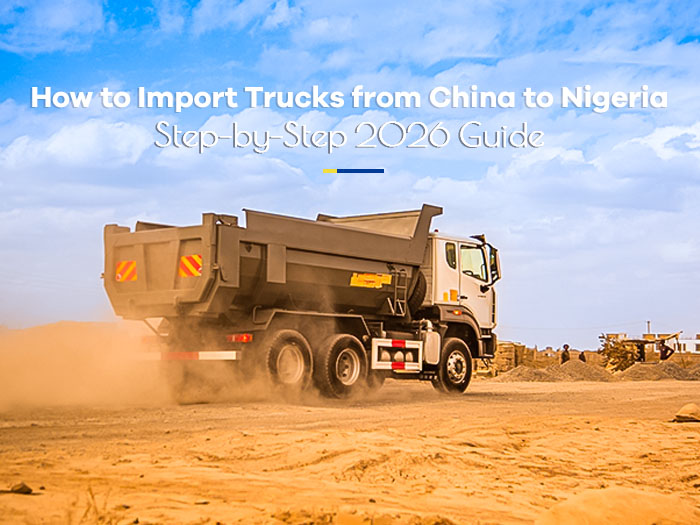
How to Import Trucks from China to Nigeria (Full Guide)
Importing trucks from China to Nigeria can be a cost-effective way to expand your fleet and improve logistics efficiency. This full guide explores every step of the process—from choosing reliable suppliers to handling customs clearance and shipping logistics. Whether you’re a business owner or an independent buyer, understanding how to import trucks from China to Nigeria will help you save time, reduce costs, and ensure smooth delivery of your vehicles.
1. Understanding the Import Market Between China and Nigeria
The trade volume between China and Nigeria has grown steadily over the past decade, with transportation and heavy-duty vehicles representing one of the most dynamic sectors. Data from logistics associations indicate that over 60% of heavy trucks imported into Nigeria between 2020 and 2023 originated from China. The main factors driving this trend are competitive pricing, expanded model availability, and optimized shipping routes.
Nigeria’s economic structure relies heavily on logistics, construction, mining, and oil transportation—industries that require thousands of durable trucks every year. Local assembly capabilities have improved, but importing directly from China remains an attractive alternative for both SMEs and large logistics companies seeking to cut costs by 15%–25% per unit compared to European brands.
The primary exporting ports in China include Qingdao, Shanghai, and Guangzhou, while Nigerian importers typically receive their shipments through Lagos (Apapa or Tin Can Island) and Port Harcourt. Transit times usually range from 35 to 45 days depending on vessel schedules, customs processing, and the choice between roll-on/roll-off (RO-RO) or container shipping.
Understanding this cross-border dynamic allows prospective importers to make informed decisions about when and how to initiate procurement, minimizing risks associated with foreign transactions and delivery delays.
2. Key Steps to Import Trucks from China to Nigeria
Importing a truck requires careful coordination from supplier selection to registration in Nigeria. These are the essential steps you should follow to ensure an efficient process:
Step 1: Identify Reliable Suppliers
Begin by evaluating truck manufacturers or authorized dealers in China that export vehicles regularly. Look for suppliers with international certifications such as ISO/TS 16949 and an export license verified through the Chinese Ministry of Commerce. Platforms like Made-in-China or Alibaba can help you compare verified vendors. Additionally, request reference shipments to Nigeria to gauge experience level.
Step 2: Get Proforma Invoice and Understand Specifications
After selecting a supplier, obtain a detailed proforma invoice that lists truck specifications, pricing, shipping terms (FOB, CIF, CFR), and delivery timelines. Typical engine capacities for heavy trucks range between 270HP and 420HP, depending on application. For example, the Howo 375HP Tractor Truck offers high torque performance suitable for long-distance haulage in regions with varying terrain.
Step 3: Prepare Documentation
Ensure all essential documents are correctly prepared, including the commercial invoice, packing list, bill of lading, certificate of origin, and vehicle conformity certificate. Missing or improperly filled forms can delay processing by 5–10 days during customs clearance in Nigeria.
Step 4: Shipping and Import Clearance
Depending on your budget and schedule, shipping can be done via RO-RO for uncontainerized trucks or by flat-rack containers for disassembled units. Freight rates fluctuate between USD 1200 and USD 3500 per truck, depending on weight and port congestion. Upon arrival, vehicles are inspected by the Nigeria Customs Service (NCS), where import duty, value-added tax (VAT), and port charges apply—together amounting to around 30%–40% of the truck’s CIF price.
The total process typically spans 25–40 days depending on shipping season and clearance complexity. Proper preparation can significantly shorten this timeline and reduce unnecessary demurrage charges, which can accumulate at USD 20–50 per day if delays occur.
3. Selecting the Right Truck Model for Nigerian Conditions
Truck selection should consider road conditions, fuel availability, and operational loads. For Nigerian routes with mixed asphalt and laterite surfaces, models equipped with reinforced suspension and high-torque engines (350–420HP) perform better and require less maintenance over 100,000 km of use.
Among popular contenders are Chinese heavy-duty series such as Sinotruk, Foton, FAW, and Shacman. Each brand offers diverse configurations for dump trucks, tractor heads, and cement mixers. Selecting the correct drivetrain—6x4 or 8x4—depends on payload requirements. Average loading capacity ranges between 25–45 tons for standard highway transport.
Fuel consumption is another key parameter. Efficient diesel engines typically consume 30–35 liters per 100 km under full load. Newer Euro IV–V compliant models also reduce maintenance intervals by up to 20%. Checking availability of spare parts locally in Nigeria is equally essential to minimize downtime.
For long-haul operations such as Lagos to Kano (approx. 1000 km), buyers should prioritize cabin comfort, braking systems, and cooling performance. The Howo 375HP Tractor Truck is widely appreciated for its balance of power and fuel efficiency, with a 6-cylinder engine and 10-speed gearbox adaptable to varying load gradients.
Balancing performance, price, and service availability ensures that your imported truck investment yields long-term operational savings and reliability across Nigerian terrain.
4. Customs Clearance, Duties, and Compliance Requirements
Nigeria follows specific import regulations to ensure roadworthiness and environmental compliance. Importers must process Form M through authorized banks and secure a Pre-Arrival Assessment Report (PAAR) from the Nigeria Customs Service before shipment arrival. Failure to do so can delay clearance by up to 2 weeks.
Duty computation is based on the truck’s CIF value (Cost + Insurance + Freight). The import duty rate typically stands at 20%, with an additional 7.5% VAT and surcharges for port handling. For example, if a truck’s CIF value is USD 50,000, total payable taxes may reach USD 14,000–16,000 including port levies and documentation fees.
To meet national standards, trucks must obtain conformity certifications such as SONCAP (Standards Organisation of Nigeria Conformity Assessment Programme). Vehicles older than 15 years are generally restricted from entry, and importers must provide Road Worthiness Certificates endorsed by certified inspection agencies in China.
Proper coordination with a licensed clearing agent experienced in automotive imports is advisable. They can streamline processes like container terminal release, duty payment validation, and gate delivery, cutting clearance time from 15 days to as low as 8–10 working days.
5. Risk Management, Payment, and Logistics Optimization
The success of import operations depends on mitigating transactional and logistical risks. Standard international trade practices recommend using irrevocable Letters of Credit (L/C) or 30%–70% Telegraphic Transfer (T/T) arrangements. Inspection before shipment—known as Pre-Shipment Inspection (PSI)—is also mandatory for most banks to validate product conformity.
Delays are common due to documentation errors and port congestion. Tracking vessels through carriers’ digital portals can help predict arrival schedules within ±3 days. It’s advisable to use freight insurance, typically costing 0.5%–1% of CIF value, to cover potential damages during transit.
Logistics optimization also involves consolidating shipments when importing multiple units. Combining 5–10 trucks in a batch may reduce per-unit freight charges by 10%–15%. Importers can partner with freight forwarders offering door-to-door logistics from factory loading in China to inland truck delivery in Nigeria.
Finally, once trucks arrive, post-import inspection should verify chassis integrity, brake performance, and emission compliance before registration with the Federal Road Safety Corps (FRSC). Performing preventive maintenance at 10,000–15,000 km intervals ensures road safety and prolongs component life.
6. FAQs: Common Questions About Importing Trucks from China
How long does it take to import a truck from China to Nigeria?
On average, the entire process—from supplier confirmation to road registration—takes 6–8 weeks. Shipping across the Indian Ocean typically lasts 35–45 days, while customs clearance may require an additional 7–10 business days.
What is the minimum number of trucks for bulk discounts?
Many Chinese manufacturers offer price reductions starting with 5 units per order. Bulk purchases of over 10 units may unlock 5%–8% discounts and lower freight costs through batch containerization.
Is financing available for import transactions?
Yes, Nigerian banks often collaborate with export credit agencies or EXIM-backed guarantees. Financing can cover 70%–80% of total import cost, repayable over 12–24 months depending on company credit profiles.
What post-import services should be prioritized?
Importers should set up service agreements addressing spare parts availability and local technical support. Using OEM-certified parts every 20,000 km keeps operating efficiency above 95% utilization throughout the truck’s lifecycle.
Conclusion and Next Steps
Importing trucks from China to Nigeria provides an opportunity for fleet owners to modernize operations, reduce costs, and access a wide selection of models tailored to African road conditions. By carefully evaluating suppliers, understanding customs requirements, and optimizing logistics, importers can achieve efficient and compliant deliveries within predictable timelines.
If you are planning to expand your commercial transport capability, consider exploring trusted models like the Howo, Foton, and FAW series. Reliable sourcing and professional logistics partnerships can ensure that your next truck purchase aligns with both performance and regulatory expectations.
To learn more about reliable models and recommendations for your operations, contact a verified exporter or request a quotation today to get competitive offers and import guidance for Nigeria’s market conditions.
Please give us a message
Our engineers help you choose the right truck or trailer based on:
- Your cargo type
- Road condition
- Payload requirement
- Local regulations