
Why Liberia Clients Choose ZW for HOWO & Lowbeds?

The decision is rarely about choosing a truck or trailer in isolation. For Liberian operators moving aggregates, timber, containers, fuel-related equipment, construction materials, or mobile plant, the practical question is whether the complete transport unit can remain productive when road conditions, loading practices, spare-parts access, and delivery timing are less predictable than on a controlled highway route.
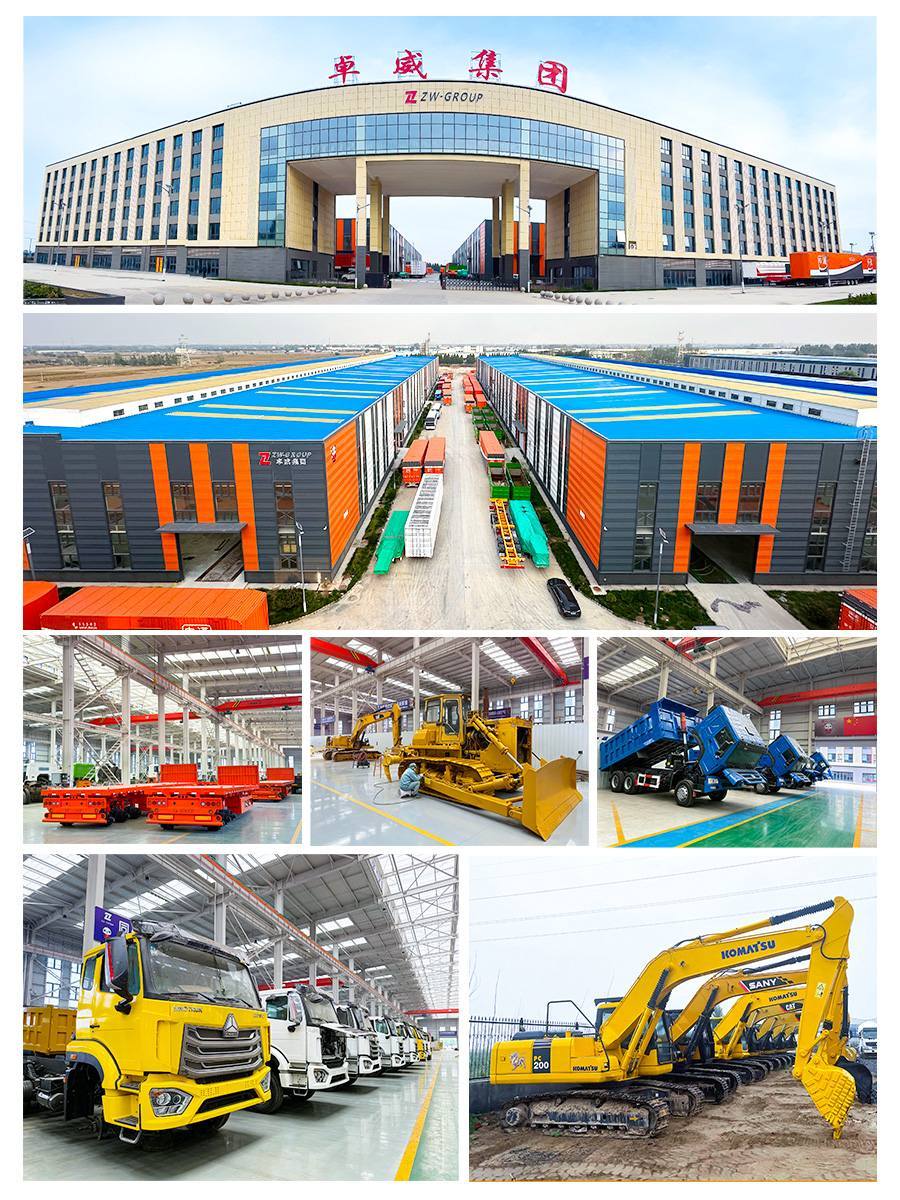
ZW is attractive to some Liberia-based buyers because it can combine HOWO tractor trucks or tippers with lowbed trailers as a workable transport package rather than treating each item as a separate purchase. The value of that approach lies in configuration discipline: matching axle ratings, fifth-wheel height, trailer deck geometry, tire specification, braking connections, and cargo type before shipment. A low purchase price alone does not create value if the truck cannot pull the loaded trailer efficiently, the ramp design does not suit the machinery, or replacement parts cannot be identified after arrival.
The operating environment makes configuration more important than brochure ratings
Transport equipment used in Liberia may face a mix of paved corridors, laterite roads, site access tracks, congested port approaches, and work zones that change with weather and construction activity. Under such conditions, buyers generally place more weight on chassis robustness, traction, ground clearance, cooling performance, and repairability than on nominal engine output alone.
A HOWO truck selected for regional highway haulage can be unsuitable for a mining-support route or a construction site if its axle arrangement, tire pattern, suspension, or reduction ratio is poorly matched to the duty cycle. Similarly, a lowbed with sufficient published capacity may still create operating problems if its deck is too high for the equipment being moved, its ramps are too steep, or its kingpin load exceeds what the tractor and fifth wheel are intended to carry.
This is one reason integrated supply has practical appeal. When the truck and trailer are considered together, the supplier has fewer grounds to treat compatibility issues as somebody else’s problem. A buyer can request a clear statement of the intended gross combination weight, axle distribution, coupling height, brake interface, electrical connector arrangement, and recommended operating limits. Those details are more useful than broad claims that a unit is “heavy duty.”
HOWO is often evaluated on serviceable heavy-haul fundamentals
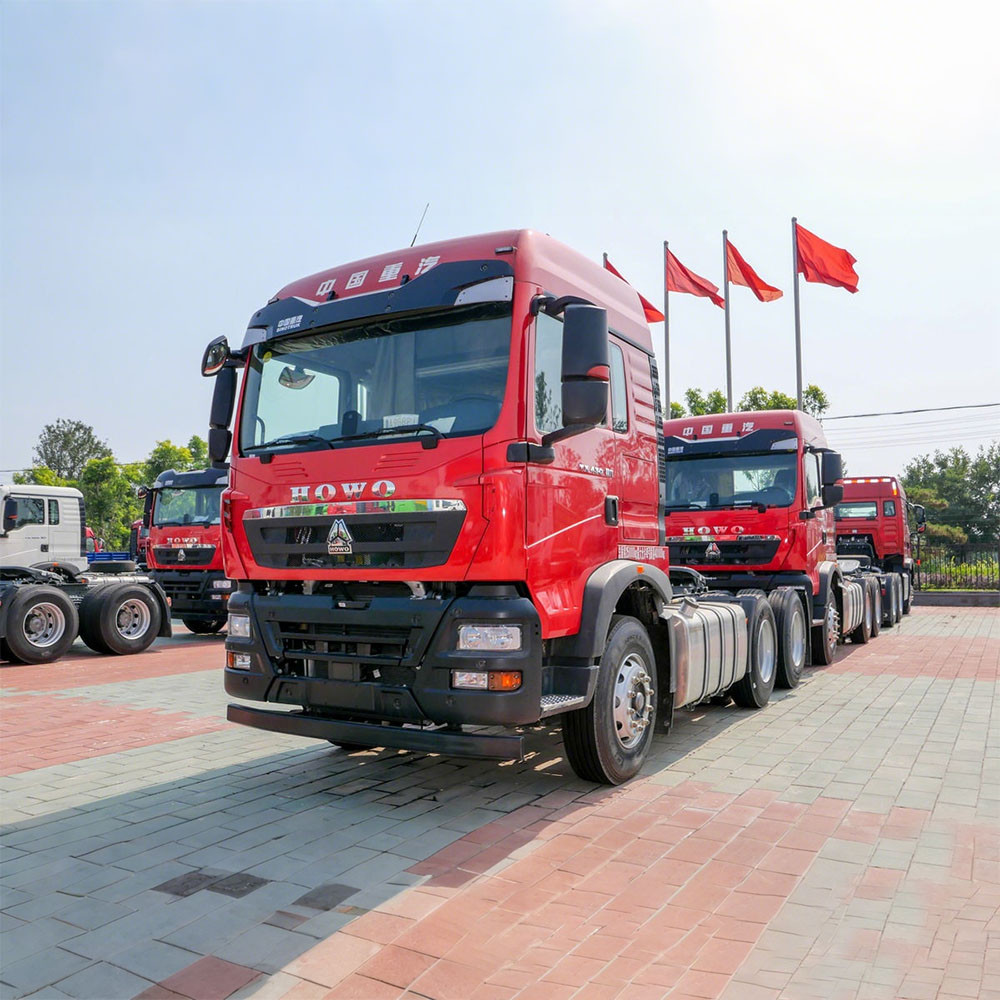
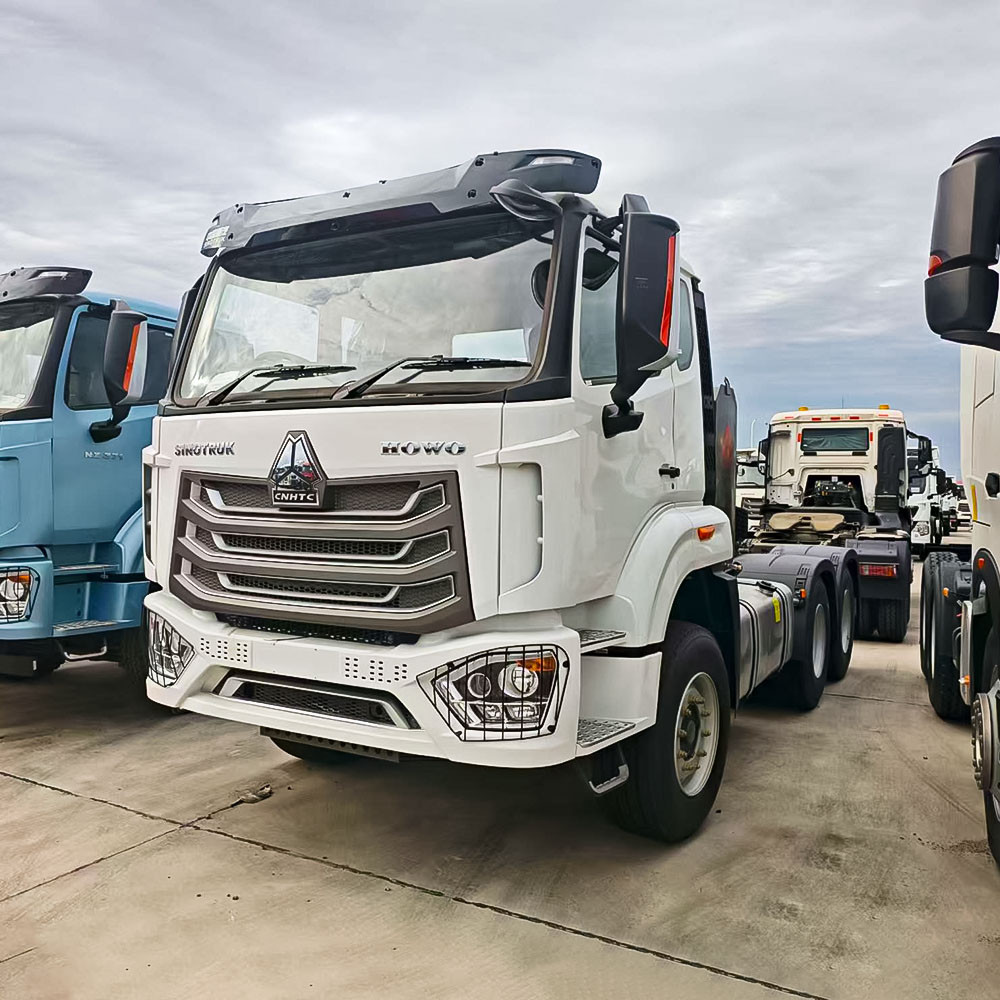
HOWO trucks have a broad international presence in construction, bulk haulage, and general heavy transport markets. In a purchase decision, their relevance is not simply brand recognition. Buyers tend to assess whether the proposed specification addresses the basic mechanical demands of the route and load.
For tractor applications pulling lowbeds, the engine’s torque delivery and gearbox ratios matter more than headline horsepower. Moving an excavator or other wheeled or tracked machine from a standstill on an incline places a different demand on the driveline than cruising with a relatively uniform container load. A truck configured with an unsuitable final-drive ratio can feel underpowered at low speed even when its advertised engine rating appears adequate. Conversely, a configuration optimized only for slow, high-torque work may consume more fuel or run at inefficient engine speeds on longer paved routes.
Axle choice requires the same discipline. A 6×4 tractor is commonly considered where traction and payload are central concerns, while a 4×2 unit may be more appropriate for lighter trailer work on better roads. The correct answer depends on the trailer’s loaded kingpin weight, terrain, expected gradients, tire loading, and legal operating limits. It should not be selected solely because one layout has more driven wheels.
Other elements frequently deserve closer review:
- Cooling capacity: Low-speed heavy pulling, high ambient temperatures, and dusty work areas can place sustained stress on the cooling system. Radiator protection, fan operation, hose quality, and cleaning access affect uptime.
- Air-brake system: Tractor and trailer braking must be compatible in hose connections, couplings, reservoir capacity, and control response. A lowbed carrying machinery has very different stopping characteristics from an empty trailer.
- Suspension and frame: Leaf-spring and other heavy-duty arrangements can be valued for straightforward maintenance, but component ratings must correspond to actual axle loads rather than assumed loads.
- Fuel and filtration arrangements: Fuel quality management, water separation, and filter availability are operational issues, not minor accessories. An engine can be technically sound yet lose availability through inadequate routine filtration support.
- Cab and electrical durability: Lighting, mirrors, wiper systems, air lines, connectors, and wiring protection matter where drivers work in rain, dust, and active construction areas.
ZW’s role in this context is most credible when it helps convert these operating requirements into a documented configuration. “HOWO truck” is not a complete technical specification; the selected engine, transmission, axle ratio, wheelbase, coupling, tires, and optional equipment determine how the vehicle will behave in service.
A lowbed is selected around cargo geometry, not just tonnage
Lowbed trailers are often described by carrying capacity, but capacity is only one part of the selection process. The dimensions and center of gravity of the cargo frequently determine whether a trailer is suitable.
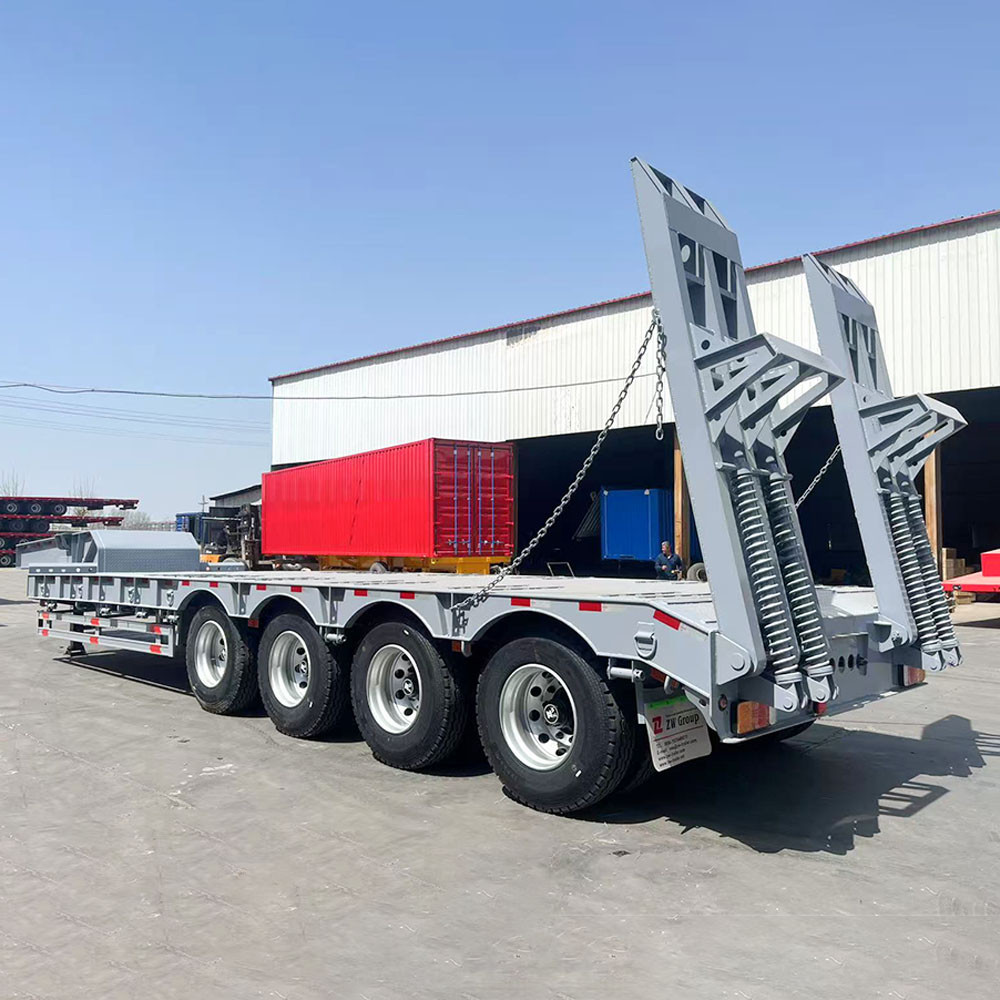
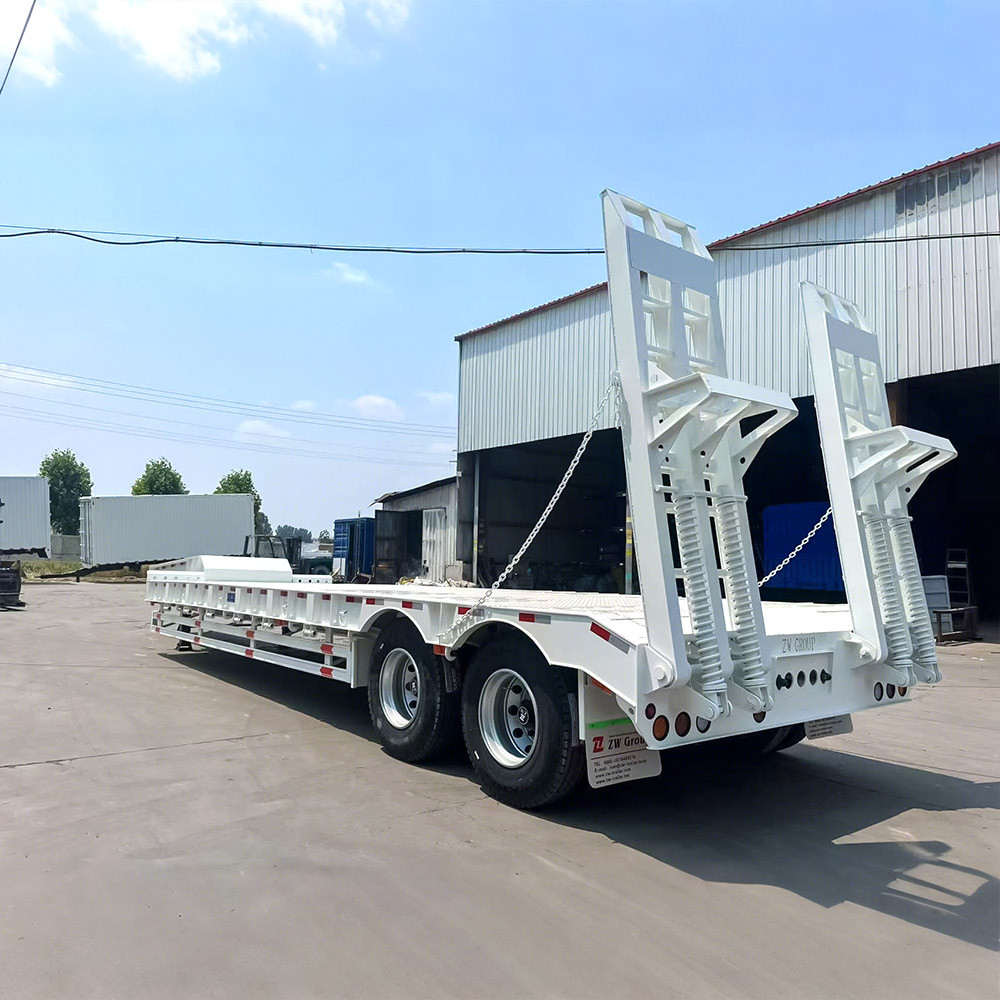
A low deck helps reduce overall transport height and improves stability for tall machinery. That advantage can be especially relevant when moving excavators, bulldozers, rollers, loaders, drilling equipment, generators, transformers, and other project cargo. Yet a lower deck may also affect ground clearance on uneven site entrances, ferry ramps, or sharply crowned roads. The trailer must balance load height against the risk of underside contact and ramp transition problems.
Deck length and usable loading area should be assessed against the machine’s track length, wheelbase, attachment position, and required spacing for chains or binders. A trailer that appears long enough on paper can still be difficult to secure if the cargo’s tie-down points do not align with available lashing locations. The issue becomes more serious when a machine carries a boom, bucket, blade, counterweight, or other projection that shifts its center of gravity.
For lowbeds, ZW’s practical value depends on whether it clarifies these design points before production or export:
- Number of axles and the rated load per axle;
- Fixed gooseneck, detachable gooseneck, or other loading arrangement;
- Mechanical or hydraulic ramp type, ramp length, and ramp angle;
- Deck height, well length, width extensions, and local road-width constraints;
- Suspension type and equalization behavior over uneven surfaces;
- Tire size, tire ply or load rating, and availability of compatible replacements;
- Landing gear capacity and stability during uncoupling;
- Lighting, reflective markings, mudguards, and electrical connection compatibility;
- Certified or manufacturer-stated lashing points, chain trays, and cargo restraint provisions.
These questions distinguish a transport tool from a basic steel platform. A buyer planning to move a 30-tonne tracked machine, for example, needs more than a trailer described as “40-ton.” The axle group loading, kingpin load, machine track position, deck strength, ramp loading, and tractor capability all require confirmation. Capacity is a system calculation, not merely a nameplate number.
Competitive value means controlling total operating exposure
Price remains a major factor in equipment imports, but the relevant comparison is the delivered and usable cost of the transport solution. A lower factory quotation can lose its advantage through unsuitable configuration, unclear spare-parts specifications, avoidable modifications after arrival, or prolonged downtime caused by a missing service item.
ZW can be a rational option where the commercial offer makes the cost structure visible. That includes the base truck and trailer specification, included accessories, shipping terms, documentation, parts supplied with the unit, warranty conditions, and any modifications requested for the intended work. Buyers should be cautious when quotations bundle major items into broad descriptions without identifying brands, capacities, or model numbers.
Parts planning is particularly important for HOWO-based fleets. The useful question is not whether parts exist somewhere in the world. It is whether the buyer can accurately identify and obtain the parts most likely to be consumed or damaged in the expected operating cycle. Filters, belts, hoses, brake chambers, air valves, clutch components, lighting units, wheel studs, suspension bushes, seals, and electrical relays can have a greater effect on uptime than a remote engine overhaul component.
Before shipment, a practical supply arrangement should establish the chassis number and engine number records, parts catalogue references, consumables list, and specification sheet for installed components. If the truck uses a particular transmission, axle, or brake-system variant, that information should be preserved in a form that local technicians and purchasing staff can use. A truck may carry the HOWO name while containing specification differences that matter when ordering replacements.
Export execution is part of equipment reliability
For imported trucks and trailers, reliability begins before the vehicle reaches the worksite. Documentation errors, mismatched equipment descriptions, incomplete packing lists, or unclear shipping responsibilities can delay commissioning and create avoidable cost. This is especially relevant for combinations in which the tractor, trailer, tools, spare parts, and loose accessories may be shipped or packed differently.
Responsive export support has value when it produces traceable answers rather than general assurances. Buyers benefit from receiving a final proforma invoice that matches the agreed technical scope, vehicle identification information when available, photographs of completed equipment, packing details, and a clear list of documents supplied for customs and registration processes. Requirements should be checked against current Liberian import, registration, tax, and road-use rules through the appropriate local authorities or qualified clearing agents; these requirements can differ by vehicle category and can change over time.
Shipping protection should also be considered. Trailers can suffer damage to lights, air lines, landing gear handles, toolboxes, and exposed fittings during port handling if they are not secured appropriately. A pre-shipment inspection should cover not only the main frame and paint finish but also the practical items that can stop a trailer from entering service: tire condition, wheel nuts, brake hoses, wiring harnesses, reflective devices, ramps, locking mechanisms, and supplied tools.
The strongest purchase decision starts with a route-and-load brief
Clients obtain better results when they provide operating information before asking for a model recommendation. The minimum brief should identify the heaviest cargo, typical cargo, dimensions of the largest machine, approximate annual usage, road surfaces, expected gradients, loading method, and whether the unit will travel mainly between fixed sites or handle varied assignments.
This information makes it possible to test the proposed truck and lowbed against the real work. It also exposes hidden constraints. A lowbed may be suitable for an excavator but unsuitable for a tall crusher module. A tractor may pull the trailer safely on level roads but lack adequate traction for an unpaved access road after rain. A ramp may accommodate a wheel loader but be too steep for low-clearance equipment. These are not minor refinements; they determine safety, cycle time, and equipment life.
The choice of ZW for HOWO trucks and lowbeds therefore makes most sense when the supplier relationship is used to reduce these mismatches. Durable equipment, practical configuration, competitive commercial terms, and export responsiveness are meaningful only when they are tied to a defined transport task. For Liberia’s demanding freight and project logistics conditions, the better purchase is not the unit with the longest list of claimed advantages. It is the truck-and-trailer combination whose capacities, dimensions, service requirements, and documentation have been checked against the loads and roads it will actually face.
Please give us a message
Our engineers help you choose the right truck or trailer based on:
- Your cargo type
- Road condition
- Payload requirement
- Local regulations